
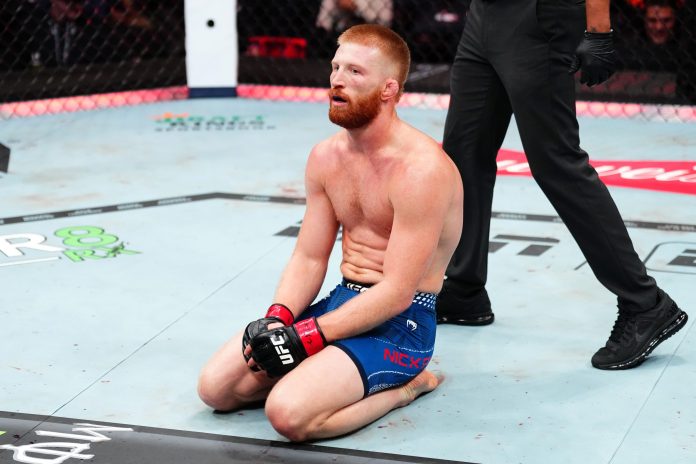
The problem? A 2021 law change that allows NCAA athletes to legally earn money off their ‘names, images, and likeness.’ Since then, the days of being an elite but broke amateur athlete are largely over. Daniel Cormier recently commented on wrestlers making $100,000 to $400,000 a year, and three time NCAA Div I champ Bo Nickal backed him up.
“For sure, bro, for sure, these kids are balling out of control,” Nickal said on the Show Me The Money podcast. “I graduated in 2019 and all that wasn’t a thing. It didn’t start until maybe ’21, ’22-ish. And now it’s in full swing and these kids are making bank. Like, those numbers that DC gave for a top level college team are pretty conservative … I’ve heard of 7-figure deals. Yeah. I’ve heard of those.”
But who is paying all these young athletes that much for their names, image, and likeness — now referred to as NIL? For football and basketball, there’s a decent amount of corporate sponsorship from major brands. Not so much in wrestling, which has a different system. So-called NIL Collectives, which are donor-funded organizations for schools which raise money from boosters and alumni. That money is then used to draw athletes to their school.
So now you have the top schools with deep pocket donors paying six to seven figure sums to attract athletes. Which is great for those athletes — for years, all the money miraculously managed to go directly into school coffers while the students doing all the work weren’t allowed to make a dime. Not so great for the sport of MMA, which has relied on those poor and exploited athletes to fill their roster.
With the UFC White House card coming up, the spotlight has begun to shine on the glaring absence of American (or at least American-born) champions. As it stands, we’ve got Kayla Harrison and that’s it. The UFC pay structure has a lot to do with the problem, and things won’t be getting better now that college athletes can make six figures while UFC fighters are expected to enter the promotion on $10k/$10k contracts.