

Brazilian jiu jitsu practitioners have long debated the safety of the heel hook. New research published in Sports Health provides concrete evidence about the risks associated with this joint lock, revealing statistics that could reshape training and competition protocols.
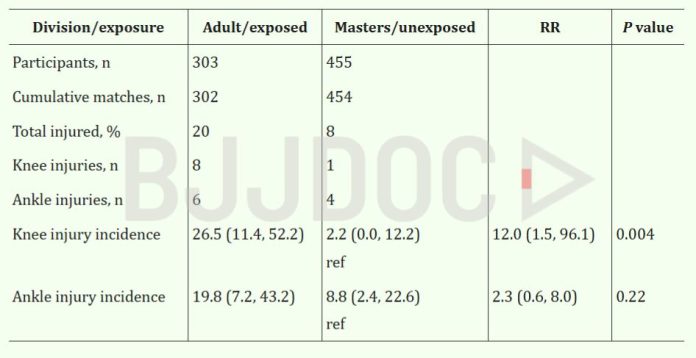
Researchers analyzed injury data from International Brazilian Jiu Jitsu Federation competitions in 2009 and 2021, comparing injury rates before and after rule changes that legalized heel hooks for adult brown and black belt competitors. The findings were striking. Knee injury incidence in competitions where heel hooks were permitted reached 26.5 injuries per 1,000 matches compared to 2.2 injuries per 1,000 matches where the technique remained banned. This represents a 12 fold increase in knee injury risk.
Lead researcher Michael Piekarski and his team examined 758 brown and black belt competitors from the 2021 Pan IBJJF Jiu Jitsu No Gi Championships alongside historical data from 164 competitors in the 2009 World IBJJF Jiu Jitsu No Gi Championships. The study focused specifically on advanced practitioners since lower belt levels prohibit joint locks like heel hooks due to safety concerns.
The heel hook technique isolates an opponent’s femur while twisting the tibia, creating dangerous rotational forces on the knee and ankle joints. Among all joint lock techniques analyzed in 2021, the heel hook produced the highest injury rate at 36.4 injuries per 1,000 matches in adult competitors. The second highest injury rate came from the armbar at 6.6 injuries per 1,000 matches, highlighting the heel hook’s disproportionate danger.
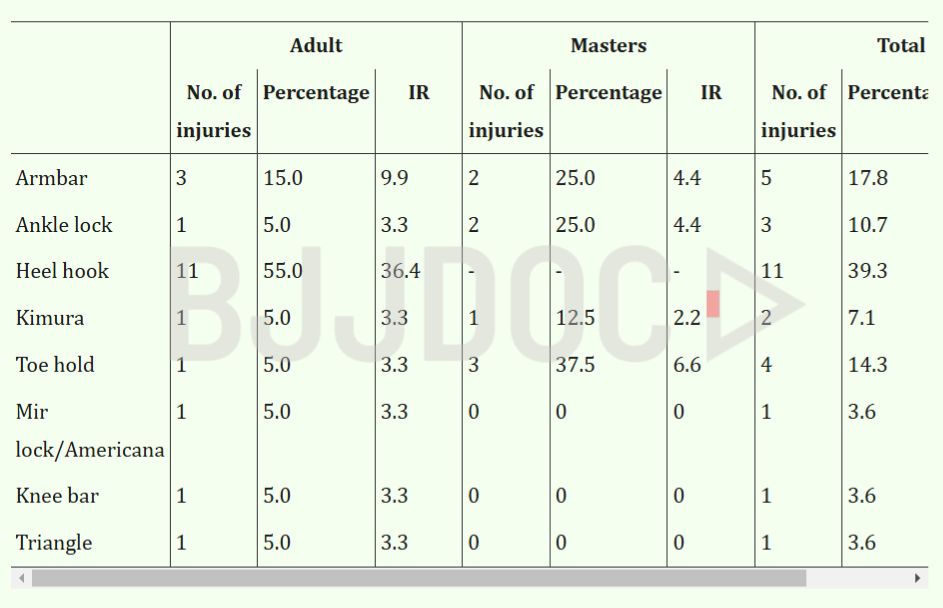
The research documented that 52.8 percent of joint injuries in brown and black belt divisions resulted directly from applied joint locks while 47.2 percent occurred during takedowns and positional exchanges. When examining injuries caused specifically by joint locks, the knee emerged as the most vulnerable target, particularly when heel hooks were permitted.
While the heel hook theoretically threatens both knee and ankle structures, the study found no significant difference in ankle injury rates between exposed and unexposed competitors. This suggests the technique’s primary danger lies in rotational stress placed on knee ligaments, particularly the anterior cruciate ligament and medial collateral ligament.
The 2021 competition data showed injured participants had an average age of 30.9 years and an average of 10.1 years of jiu jitsu experience, indicating that even seasoned practitioners remain vulnerable to heel hook related injuries.
The researchers proposed several practical applications to reduce injury risk. Athletes should receive education on proper heel hook application, including gradual force rather than sudden cranking motions. Practitioners must also learn defensive responses such as escaping the knee line and slipping the heel before damaging pressure accumulates.
A critical factor in injury prevention is understanding when to tap. Once pressure registers on the knee joint, structural damage may already be occurring. This delayed pain response makes the heel hook particularly dangerous compared to other submissions that provide clearer warning signals.
The study also recommends enhanced referee training to identify dangerous heel hook scenarios and stop matches before injuries occur. Competition officials are encouraged to implement long term injury tracking to evaluate whether current policies require adjustment based on ongoing risk assessment.
The researchers acknowledged several limitations including relatively small participant numbers and potential underreporting from competitors who avoided seeking medical attention. The study also lacked diagnostic imaging and formal injury diagnoses, relying instead on clinical evaluations by onsite healthcare providers.
Despite these constraints, the 12 fold increase in knee injury risk presents compelling evidence regarding the dangers of heel hooks. The findings suggest that while universal prohibition may be unrealistic given the technique’s integration into modern jiu jitsu, meaningful safety improvements remain necessary.
Refrence:
Piekarski M, Kreiswirth E, Barber Foss K, Jimenez ML, Myer GD, Montalvo AM. Knee Injury in Competitive Brazilian Jiu Jitsu Athletes: Implications for Training. Sports Health. 2026 Jan 18:19417381251400303. Online ahead of print. doi:10.1177/19417381251400303. PMID:41549501; PMCID:PMC12815628.