

Roger Gracie and Gordon Ryan are both on the record as having said that competitors need to work on their weaknesses and on their strengths. When most people think about jiu-jitsu fundamentals they imagine countless hours drilling escapes from bad positions.
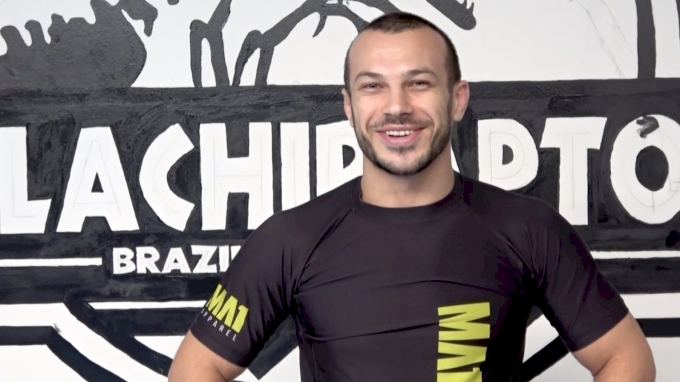
Lachlan Giles believes this traditional approach may actually be holding competitors back.
In a recent conversation Giles presented a controversial perspective on how competitors should structure their training.
“I think for fundamentals for a competitor, if you actually want to compete, spending a lot of time learning how to escape out of bad positions is not really a great use of your time. Basically, if someone has had your guard passed or you are stuck under side control, mount or the back, it is an extre mely hard task to come back and win that match.”
This is not about ignoring defense entirely. Rather, Giles argues that competitors should focus their defensive energy earlier in the chain of events.
“Time spent preventing that from happening is probably a better use of your time rather than spending a lot of time actually getting good at getting out of those positions.”
Giles uses Rafael Mendes as a prime example.
“There was one match, but otherwise I basically have not seen him ever under side control, anyone on his back or anyone past his guard. Would it be to his benefit or his detriment if when you started him out in jiu-jitsu he spent 80 percent of his time escaping out of bad positions? Or would it have been better to take someone like that and go, okay, you are going to be spending most of your time playing guard. Let us start you there and get you good at keeping it there and prevent them from passing.”
The key distinction Giles makes is between competition focused training and general jiu-jitsu practice. In competition, once points are scored against you the mountain becomes significantly harder to climb.
“Defense before you have actually been scored on in a competition, if you recover, someone is trying to pass your guard, you are in a bad spot, but there are no points yet. You might even turn or have to turtle, but you prevent them getting hooks, you escape. You are still in the match.”
Giles would rather you learn how to defend hooks from the back over escaping once hooks are already in and prioritizing guard retention over side control escapes.
“The things that you can do before you are scored on are just much better. Defending hooks from the back is a better skill set for a competitor than being really good at escaping once someone has hooks because now they have the hooks and they have their points. It is a very difficult task to not only escape but then come back and actually get yourself ahead on the scoreboard or submit your opponent.”
Giles identifies multiple layers of guard retention that should take priority over traditional escapes. These include early retention where you pummel your legs back in front, knee shields and shin based frames, turning on your side while hiding underhooks and trapping half guards and turtling while preventing hooks.
“There are probably four major layers of guard retention that are all very difficult battles for the person on top to win if the bottom player is doing them well. In the end, escapes are just another layer, the fifth layer beyond that. Then you have submission escapes, which become the sixth layer.”
“I think he is so good that he almost needs to train the contingency plans quite a lot. Someone takes his back, I would still back him against most people. Someone takes his back, he is going to get out, come back and still win that match, which means you need to be considerably better than your opponents for that to be the most viable thing to work on.”
In self defense scenarios managing distance from bottom position often means keeping an attacker close to limit strikes. In pure grappling the opposite tends to apply.
“Generally, when you are on bottom, you actually want quite a bit of distance so you can use your legs well, keep frames and keep layers of defense ahead of you.”
The broader principle Giles advocates is bringing defense forward in the sequence of events.
“I think defense matters a lot. Guard retention is obviously defense. It is just much more proactive and it is closer to being offense.”
The takeaway is not that escapes are useless. Rather, for competitors specifically, the return on investment is far higher when focusing on earlier defensive layers and preventing bad positions altogether.
“No one passes my guard. I have to compete here. I cannot let someone get hooks.”
According to Giles, developing this mindset produces grapplers who are harder to beat in any context, not just competition.