


By Senior Editorial Staff
February 9, 2026 – As mixed martial arts continues its global surge, calls for structural changes in the UFC’s weight class system are growing louder. With a talent pool deeper than ever, experts and fans alike argue that now is the perfect time to add a 165-pound division and a 175-pound division while eliminating the longstanding 170-pound welterweight class. This shift could streamline fighter matchups, reduce health risks, and better accommodate the sport’s explosive growth.
The UFC’s weight divisions have always been a reflection of the sport’s maturity. When the promotion launched in 1993, it featured only a single open-weight class—essentially a heavyweight division—due to the scarcity of participants and practitioners. Early events like UFC 1 were chaotic free-for-alls, pitting fighters of vastly different sizes against each other because the talent pool was simply too small to justify segmentation. As MMA gained traction in the late 1990s and early 2000s, the UFC introduced middleweight (185 pounds), welterweight (170 pounds), and lightweight (155 pounds) divisions. These additions were a resounding success, allowing for more competitive bouts and attracting a broader range of athletes who could specialize in their natural weight classes.
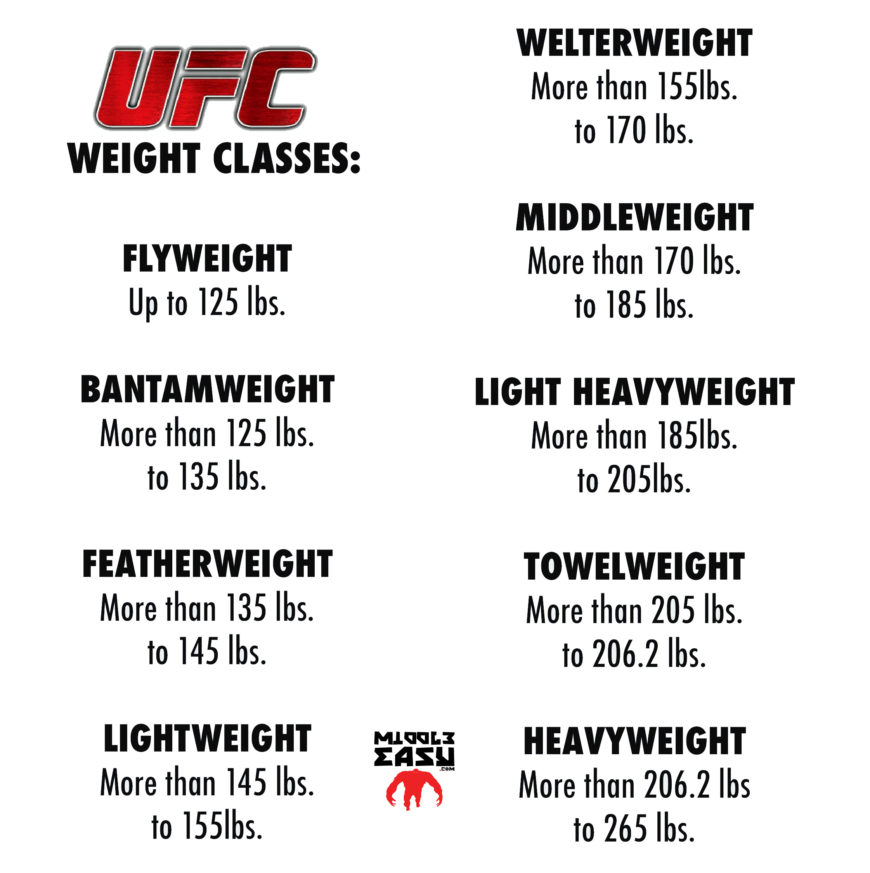
At the time, these changes met the needs of a burgeoning but still limited fighter base. The sport was niche, confined mostly to North America and a handful of international hotspots. A flyweight division at 125 pounds, for instance, would have been unthinkable back then—there simply weren’t enough skilled competitors to sustain it without diluting the quality of fights. Fast-forward to today, and the UFC’s 125-pound men’s division thrives, thanks to MMA’s worldwide acceptance and appeal. From Brazil to Russia, Asia to Africa, training academies are churning out talent at an unprecedented rate, enabling the promotion to fill even the lightest weight classes with world-class athletes.
This evolution underscores a key principle: weight divisions should adapt to the flow of talent, not constrain it. In 2026, with MMA’s global footprint larger than ever—bolstered by streaming deals, celebrity endorsements, and youth programs—the talent pool has exploded. Yet, under the current structure, bottlenecks are evident, particularly at 155 and 170 pounds. Lightweight (155) is notoriously stacked, with fighters cutting extreme weight to compete, leading to health concerns like dehydration and long-term organ damage. Welterweight (170) faces similar issues, as athletes who are naturally between these classes often force themselves into ill-fitting divisions, compromising performance and safety.
Introducing a 165-pound division and a 175-pound division, while phasing out 170 pounds, would create a more logical progression with classes separated by consistent 10-pound intervals: 155, 165, 175, 185, and so on. This uniformity—already seen in heavier classes—would eliminate arbitrary gaps and better distribute talent. “Big lightweights,” such as those who dominate at 155 but struggle with the cut, could seamlessly move up to 165 without facing oversized opponents. Similarly, “smaller welterweights” who cut down to 170 but lack the power against larger foes could find a natural home at 165 or shift to 175 if it suits their frame.
The benefits extend beyond fighter welfare. A restructured system would enhance matchmaking, leading to more exciting cards and fewer “mismatch” complaints. With the UFC’s roster now exceeding 600 active fighters, the depth exists to populate these new divisions without thinning others. Historical precedents, like the addition of women’s divisions in the 2010s, show that such expansions invigorate the sport, drawing in new fans and sponsors. Moreover, in an era where athlete health is under scrutiny—amid discussions on brain trauma and weight-cutting regulations—this change could position the UFC as a leader in progressive reforms.
Critics might argue that altering iconic divisions like welterweight, home to legends like Georges St-Pierre and Kamaru Usman, risks alienating purists. However, the sport’s history is one of adaptation: from no rules to regulated bouts, from one division to ten. As MMA enters its fourth decade, clinging to outdated structures ignores the reality of a vastly expanded talent pipeline.
In summary, 2026 represents a pivotal juncture for the UFC. With global participation at an all-time high and talent bottlenecks straining the current setup, adding 165 and 175-pound divisions while retiring 170 pounds isn’t just feasible—it’s essential. This evolution would honor the sport’s roots while propelling it forward, ensuring fairer fights and a brighter future for generations of athletes.
Fighters Who Would Benefit at 165lb (“Big Lightweights” Moving Up or “Smaller Welterweights” Moving Down)
These athletes often struggle with the 15lb gap between 155lb and 170lb, either draining themselves excessively at lightweight or being undersized/power-disadvantaged at welterweight.
- Charles Oliveira — As a former lightweight champion with a history of tough weight cuts and recent performances showing signs of strain at 155lb, Oliveira could move to 165lb for an easier cut. This would preserve his explosive finishing ability without the extreme dehydration, potentially extending his prime and giving him a fresh path to another title run in a less bottlenecked division.
- Dustin Poirier — A longtime lightweight contender who has walked around heavier and faced size disadvantages against larger 155lb fighters. At 165lb, Poirier would avoid brutal cuts, regain natural power and energy, and thrive against a mix of former lightweights and smaller ex-welterweights, positioning him as a top contender or champion.
- Colby Covington — One of the smallest active welterweights (walking around ~182lb but often undersized against taller 170lb opponents). Dropping to 165lb would make him far more competitive size-wise, eliminating reach disadvantages and allowing his wrestling/pressure style to dominate without facing oversized foes.
- Rafael dos Anjos (RDA) — A former lightweight champion who has competed at welterweight but looked undersized there. 165lb would be his ideal natural range, reducing cut severity and letting his veteran skills shine in balanced matchups.
- Leon Edwards — Often cited as smaller for welterweight, Edwards could find 165lb more comfortable. This move would help him avoid power disadvantages against bigger 170lb (or future 175lb) fighters while maintaining his elite striking and defense.
Other notable mentions for 165lb include fighters like Jalin Turner (tall, rangy lightweight who could benefit from less cut strain), Benoit Saint-Denis (explosive but size-challenged at 155lb in deeper fields), and veterans like Jorge Masvidal or Nate Diaz (who have long advocated for 165lb as a better fit).

Fighters Who Would Benefit at 175lb (Larger Welterweights Moving Up)
With welterweight shifting to 175lb, bigger-framed fighters who currently cut heavily or dominate size-wise at 170lb would gain advantages.
- Kamaru Usman — A naturally larger welterweight who has rehydrated to significant advantages post-cut. At 175lb, Usman could cut less aggressively, preserve power/speed, and remain dominant against similarly big opponents without the health toll of repeated extreme cuts.
- Gilbert Burns — Frequently mentioned as too heavy for 155lb attempts and powerful at 170lb. 175lb would suit his muscular frame perfectly, easing weight management and allowing his grappling-heavy style to flourish against a rebalanced field.
- Belal Muhammad or similar mid-tier welterweights — Fighters who are comfortably large at 170lb would transition smoothly to 175lb, avoiding any forced downsizing while competing against peers of comparable build.
This shift would alleviate bottlenecks at 155lb (freeing spots for true lightweights) and 170lb (reducing size mismatches), leading to healthier fighters, more exciting bouts, and better longevity. While not every fighter would move, the talent depth in 2026 supports these changes without weakening existing divisions.
What do you think? Post your opinions and thoughts in comments!