
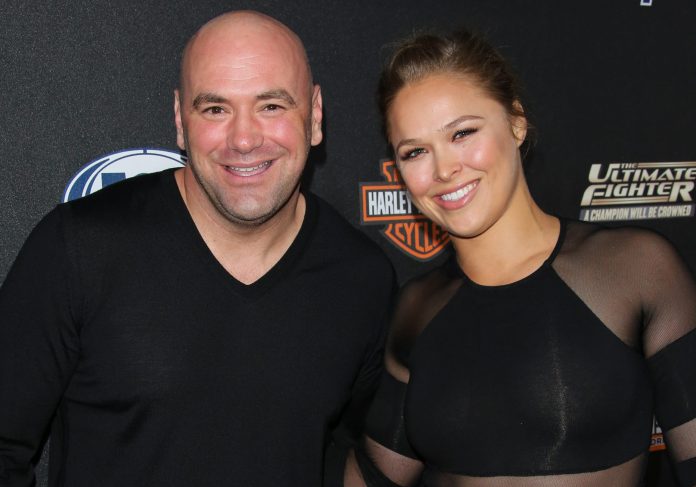
Ronda Rousey was in talks to return to Ultimate Fighting Championship (UFC) and make record-breaking money to fight Gina Carano, but the promotion’s transition to Paramount+ and death of pay-per-view (PPV) points put all that to rest.
Earlier this week, Rousey and Carano dropped a bombshell on the mixed martial arts (MMA) community by announcing a fight for May 16 on Netflix. The two women’s MMA pioneers partnered up with Jake Paul and Most Valuable Promotions (MVP) to make the superfight a reality. It may be 10 years too late from when Rousey and Carano were in their respective primes, but it’s still a big deal for MMA in 2026.
The first question fight fans were asking was whether or not UFC had a shot to bring Rousey vs. Carano to the Octagon. According to Rousey, all parties were involved in talks to get a deal done prior to UFC’s transition from ESPN+ to Paramount+. Once the new partnership took flight and PPV points went away it completely changed what UFC was willing — or approved — to offer both Rousey and Carano.
Check it out below:
“I went to (Dana White) and said, ‘Dude, you always say that I’m the best fighter you ever worked with. Like, reward me for it. Don’t punish me for being easy to work with. Give me the best deal you ever gave anybody,’” revealed Rousey during a recent interview with Jim Rome.
“He came back and he like literally brought me a deal where I would make more per pay-per-view buy than anybody in history.”
“It happened to go to the other side of when the ESPN deal and their pay-per-view model would be ending and they would be going to streaming,” added Rousey.
“They didn’t want to set a precedent of giving me the guaranteed money that I deserve because once I raise that tide it lifts all the boats.
“It’s in their best interest actually not to put on the best fights possible, but to spend as little as money as possible so that he can keep it.”
Once Rousey and Carano knew UFC would not be able to give them the type of money they were looking for the two women took their superfight to Paul and MVP. It wasn’t for a lack of trying on UFC’s part, but still a bittersweet end to Rousey’s storied journey with the promotion.
“It no longer made sense for me to go over there because they didn’t want to pay us the money that we deserve because then for the rest of the the time of the deal, they’re going to have to pay everybody else more,” explained Rousey. “And so then I decided to look elsewhere.”