
Last year the UFC paid $375 million to fighters in order to settle a Le v. Zuffa antitrust case that accused the company of using monopsony power to illegally depress fighter wages between 2012 and 2017. Now Johnson v. Zuffa makes the same claim for 2017 onwards, while Cirkunov v. Zuffa argues arbitration and class action clauses added to fighter contracts to avoid another anti-trust suit are invalid.
Those cases are being handled together by Judge Richard Boulware, the same man who oversaw the settlement of Le v. Zuffa. Discovery is still in progress, or rather legal wrangling over why there’s so little discovery presented from UFC.
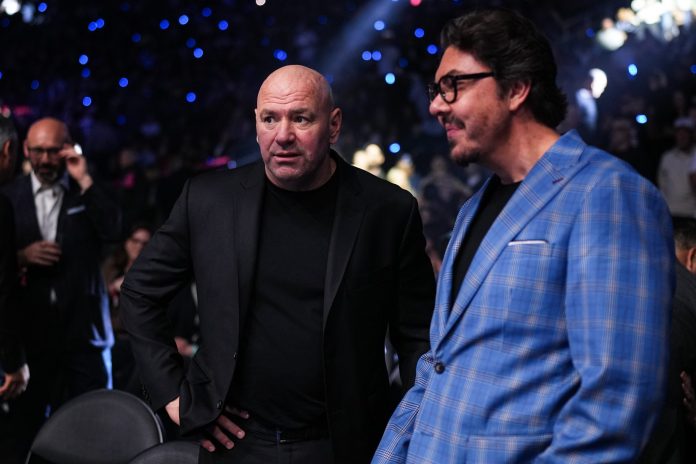
Spoliation hearings don’t happen unless a judge is already questioning why there’s so much missing information, and UFC didn’t do itself any favors over February 4th and 5th as its employees (including UFC CEO Dana White and COO Hunter Campbell) took the stand to testify on what happened to what was supposed to be carefully maintained communications.
White and Campbell admitted there were years of messaging on various phones missing, but professed ignorance as to how those phones disappeared and even how many phones might be missing. According to The MMA Draw’s Zach Arnold, that could be part of a legal strategy to avoid serious sanctions from the court that only kick in if ‘intent to deprive’ is proven.
“Under FRCP Rule 37(e), Judge Boulware has the power to inflict sanctions upon UFC,” Zach wrote on The MMA Draw. “These sanctions could impact current on-going antitrust litigation in his court. If Judge Boulware can prove that there was intent to deprive then he can inflict significant sanctions, including adverse jury instructions or striking pleadings. Reaching this threshold is extraordinarily rare, even in the Ninth Circuit.”
“UFC did not deny that there are missing messages,” he continued. “They did not deny there are years worth of missing texts. They did not deny any of this. They have not provided an answer to it. They’ve just said, we didn’t do it intentionally. And that is clearly a very technical legal argument because The federal rules of civil procedure in American federal court for evidence is based on what’s called Rule 37.”
In a detailed podcast breakdown of the multi-day spoliation hearing, Arnold expanded on the situation.
“The legal strategy is very clear from TKO’s side,” he said. “Intent. They are obsessed with the phrase ‘intent to deprive’ because that is the standard that you go from minor sanctions like fines to major sanctions like adverse jury instructions or default. That is the reason why they’re so focused on intent.”
“The UFC has been parsing this very carefully because they understand that if Judge Boulware can find evidence that they intentionally deprived the plaintiffs of text messages, of data, of contracts, of really important stuff in their fighter files for negotiations, then it’s sanctionable.”
“The question becomes what kind of sanction?” he asked. “Is it a misdemeanor or is it a felony? Is it a felony or is it a felony with aggravated factors? That’s what we’re facing right now. And that was the crux of the hearings for two days this past week in federal court.”
Fighter lawyers spent a lot of time trying to nail down who used what phone when, but their best work was in finding and presenting fragments of conversations that implied a lot of notable business dealings were happening in missing data, like legal department head Tracy Long’s emails regarding Ilia Topuria, who apparently did not submit a contract to fight Charles Oliveira until days before their UFC 317 fight.
There were also messages from a group chat shown in court that involved unnamed UFC executives and matchmakers discussing their opposition to turning over data to the courts. One matchmaker said he was against complying, and another anonymous person declared they could “suck my dick.”
Judge Boulware has ordered the UFC to make a full accounting of what phones are missing and why, with a goal of sorting out this spoliation mess by the end of April. If he decides that the UFC has been willfully depriving fighter lawyers of crucial information to their case, it could lead to big legal sanctions that could change the way this latest anti-trust case is handled moving forward.